The True Meaning of Memorial Day — And Why It Matters Across RVA
Memorial Day is often treated as the unofficial start of summer, a long weekend marked by cookouts, travel, and retail sales. But the true meaning of the holiday runs far deeper, rooted in grief, remembrance, sacrifice, and the evolving story of America itself.
At its core, Memorial Day exists to honor U.S. military service members who died while serving in the armed forces. It is not simply a patriotic celebration or another day off work. It is a solemn national day of remembrance.
That meaning carries unique weight across the RVA region from Richmond to Petersburg, Henrico, Chesterfield, Hopewell, Colonial Heights, and the surrounding communities shaped by Civil War history, Black history, military service, and public memory.
The Origins of Memorial Day
Memorial Day emerged in the aftermath of the Civil War, the deadliest conflict in American history. Across the country, grieving communities organized “Decoration Days,” gathering to place flowers on soldiers’ graves and honor those who never returned home.
One of the earliest known observances took place in Charleston, South Carolina, in 1865, when formerly enslaved Black Americans honored Union soldiers buried in a mass grave. Historians increasingly recognize this moment as one of the foundations of Memorial Day because it tied remembrance directly to emancipation and freedom.
By 1868, Decoration Day became a formal observance among Union veterans organizations. Following World War I, the holiday expanded to honor all American military personnel who died in service. In 1971, Memorial Day officially became a federal holiday observed on the last Monday in May.
Why Memorial Day Holds Special Meaning in RVA
Few regions in America carry the layers of military and Civil War history found across RVA.
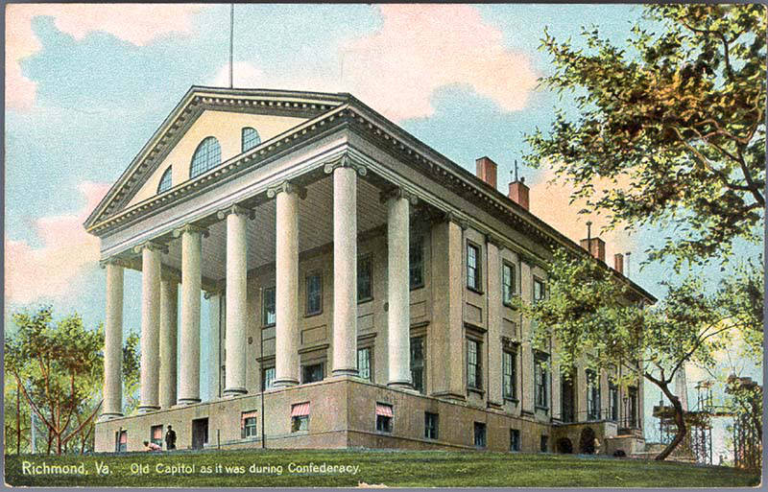
As the former capital of the Confederacy, Richmond became one of the central places where the memory of the Civil War was shaped, preserved, romanticized, and later challenged. Nearby Petersburg witnessed some of the war’s most devastating battles, including the Siege of Petersburg, which helped bring the Confederacy to collapse.
Sites like Hollywood Cemetery became major centers of Confederate remembrance, while battlefields, churches, cemeteries, and neighborhoods throughout the region carried the emotional and political legacy of the war for generations.
Throughout the late 19th and early 20th centuries, RVA became deeply associated with the “Lost Cause” narrative, a revisionist interpretation of the Civil War that romanticized the Confederacy while minimizing slavery’s central role in the conflict.
This history matters because Memorial Day in RVA has never only been about honoring military sacrifice. It has also been about deciding whose stories are publicly remembered, whose sacrifices are centered, and whose histories are overlooked.
Fort Lee’s Place in RVA’s Military Identity
No conversation about Memorial Day in Central Virginia is complete without acknowledging Fort Lee — one of the region’s strongest modern connections to military service and veteran life.
Located just south of Richmond near Petersburg, the installation has long shaped the economic, cultural, and military identity of the region. Generations of active-duty soldiers, veterans, military families, and civilian workers have lived throughout RVA while serving at the base.
In 2023, the installation was redesignated as Fort Gregg-Adams to honor Lieutenant General Arthur Gregg and Lieutenant Colonel Charity Adams Earley, two groundbreaking Black Army officers whose careers represented major milestones in American military history. The renaming was viewed by many as part of a broader national effort to move military installations away from Confederate-associated names following the racial justice protests of 2020.
However, under the current administration, the base’s name was later changed back to Fort Lee. Because federal law prohibited installations from being named after Confederate leaders, officials used a legal workaround by naming the base after Private Fitz Lee, a Black Buffalo Soldier and Medal of Honor recipient from the Spanish-American War who shared the same surname as Confederate General Robert E. Lee.
The decision reignited debates across RVA and the nation surrounding race, military tradition, symbolism, and public memory.
For some residents, Fort Gregg-Adams represented long-overdue recognition of Black military excellence and the contributions of African American service members historically excluded from public commemoration. Others viewed restoring the Fort Lee name as preserving military heritage and regional tradition.
That tension reflects the broader complexity of Memorial Day in RVA itself:
a region where remembrance, military pride, Civil War memory, race, and public history continue to intersect in deeply personal ways.
Black RVA and the Meaning of Remembrance
Black communities across Richmond and Central Virginia carried a different understanding of Memorial Day as well.
For African Americans, remembrance often connected directly to:
- emancipation,
- Union victory,
- Black military service,
- civil rights,
- and the struggle for full citizenship and equality.
Black churches, civic organizations, and veterans groups throughout RVA preserved the stories of Black soldiers who served in segregated units from the Civil War through Vietnam and beyond.
Institutions like Virginia Union University played important roles in honoring Black veterans whose service was frequently overlooked in mainstream public memory.
For many Black families in RVA, Memorial Day represented not only military sacrifice, but also the continuing pursuit of freedom, dignity, and recognition.

Why Many Veterans Discourage Saying “Happy Memorial Day”
One of the most misunderstood aspects of Memorial Day is how the holiday is spoken about publicly.
Many veterans and military families discourage saying “Happy Memorial Day,” especially to combat veterans or Gold Star families who may be grieving friends, relatives, or fellow service members who died during war.
Unlike Veterans Day, which honors all who served, Memorial Day specifically honors those who lost their lives during military service.
For many veterans, the day carries the emotional weight of loss rather than celebration.
That distinction matters in RVA, where military service remains deeply woven into the identity of the region through Fort Lee, veteran communities, military families, and generations connected to war service.
Rather than saying “Happy Memorial Day,” many people instead choose expressions such as:
- “Wishing you a meaningful Memorial Day,”
- “Thank you for remembering,”
- or simply acknowledging the sacrifice the holiday represents.
The goal is not performative etiquette. It is respect.
Memorial Day and Public Memory in Modern RVA
Today, the RVA region reflects a broader national shift in how Americans understand history and remembrance.
The removal of Confederate monuments following the 2020 racial justice protests forced many communities to reconsider how public memory is shaped and who gets memorialized.
Conversations surrounding Memorial Day now increasingly include:
- the role of monuments in public history,
- Black military service,
- historical erasure,
- reconciliation,
- and how communities honor sacrifice without ignoring historical truth.
In RVA, Memorial Day exists at the intersection of multiple histories:
- military sacrifice,
- Civil War memory,
- Black freedom struggles,
- and the ongoing evolution of public remembrance.
More Than a Long Weekend
Memorial Day is not simply a vacation, a sale, or the beginning of summer.
It is a national act of remembrance rooted in grief, sacrifice, reflection, and historical honesty.
And across RVA , a region shaped by war, emancipation, military service, and changing public memory, the holiday asks something deeper of its communities:
not only to honor those who died serving the country, but also to confront the full history of the nation they died serving.
Author