Richmond’s Dystany Spurlock Reached NASCAR’s National Stage — Even as the Climb Continues
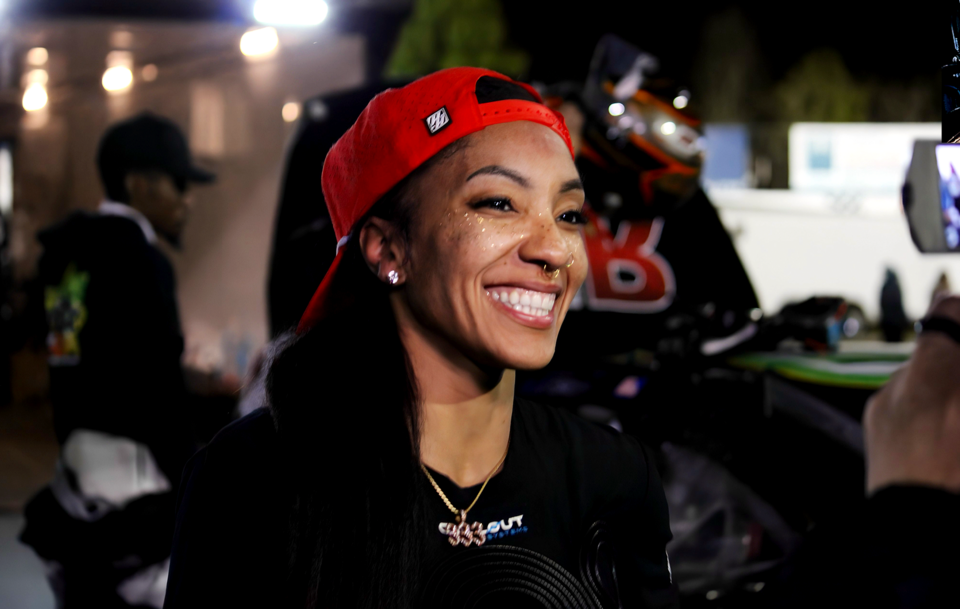
Long before Dystany Spurlock arrived at Watkins Glen International, long before national interviews and documentary cameras followed her journey, she was a girl from Highland Springs growing up around the sounds of Richmond Raceway.
Race weekends echoed through the area near her grandfather’s house, where NASCAR became part of the backdrop of childhood.
“My grandfather would open the door because we were two miles from Richmond Raceway,” Spurlock told the Arizona Daily Star earlier this year.
This weekend, the Richmond native took another major step in a racing career that has already carried her through motorcycle drag racing, Formula 4 competition, and the ARCA Menards Series. Spurlock attempted to make her debut in NASCAR’s Craftsman Truck Series at Watkins Glen, becoming the first Black woman to reach that level of NASCAR competition.
Her weekend, however, also reflected the harsh realities of motorsports.
Spurlock did not qualify for Friday’s Truck Series race after mechanical and performance issues limited the No. 69 MBM Motorsports Toyota during qualifying. In an interview afterward with Frontstretch, she described the weekend as difficult but made clear that she intends to continue pursuing Truck Series opportunities this season.
Even without making the field, the moment carried significance inside a sport where Black women have remained almost entirely absent from the national spotlight.
For years, NASCAR has attempted to diversify its audience and driver pipeline through development programs and outreach initiatives. Drivers like Bubba Wallace and Rajah Caruth have become visible examples of Black representation in stock car racing, but Black women remain exceedingly rare at NASCAR’s upper levels.
Spurlock has spoken openly about recognizing that absence herself.
“You have Bubba (Wallace), Rajah (Caruth), Lavar (Scott) … but there’s no women,” she said earlier this year in an interview with ARCA.
Her rise through motorsports has also looked very different from the traditional paths many professional drivers follow. Unlike competitors backed by family racing organizations or major sponsorship systems from childhood, Spurlock’s career has been shaped by interruptions, financial barriers, and years spent rebuilding opportunities.
She began racing motorcycles competitively as a teenager and later competed in NHRA Pro Stock Motorcycle events while continuing to pursue stock car racing opportunities. Earlier this year, she became the first Black woman to compete on the ARCA Menards platform at Hickory Motor Speedway, where she finished seventh. She later earned a top-10 finish in her ARCA national series debut at Kansas Speedway.
At different points in her career, Spurlock stepped away from racing entirely, working as a flight attendant and truck driver while trying to find a way back into the sport.
Those experiences remain central to understanding her story.
Motorsports is one of the most financially demanding professional sports in the country, with sponsorship backing and industry connections often determining who receives opportunities and who disappears from the pipeline altogether. For women and drivers of color, those barriers can become even steeper.
Spurlock acknowledged those challenges earlier this year, saying, “I’ve had so many doors closed in my face.”
That persistence has become one of the defining characteristics of her career.
Her rise has also attracted broader attention beyond racing circles through a documentary project supported by media company Foxxtecca, which has followed her return to professional motorsports. In a statement earlier this year, Foxxtecca co-owner Chris Harris described her success as the result of “preparation, opportunity, and an intentional support system.”
For Richmond, Spurlock’s emergence represents something larger than one race weekend.
The city has long held deep ties to NASCAR through Richmond Raceway, yet motorsports has rarely been part of the broader story surrounding Black athletic culture in Richmond. Spurlock’s visibility begins to challenge that absence by placing a Black woman from Highland Springs into a national racing conversation where people who look like her have historically been missing.
And while Watkins Glen did not end with a Truck Series start, it still marked another step forward in a career built on persistence, reinvention, and the refusal to leave racing behind.
For Spurlock, the climb continues.
Author