

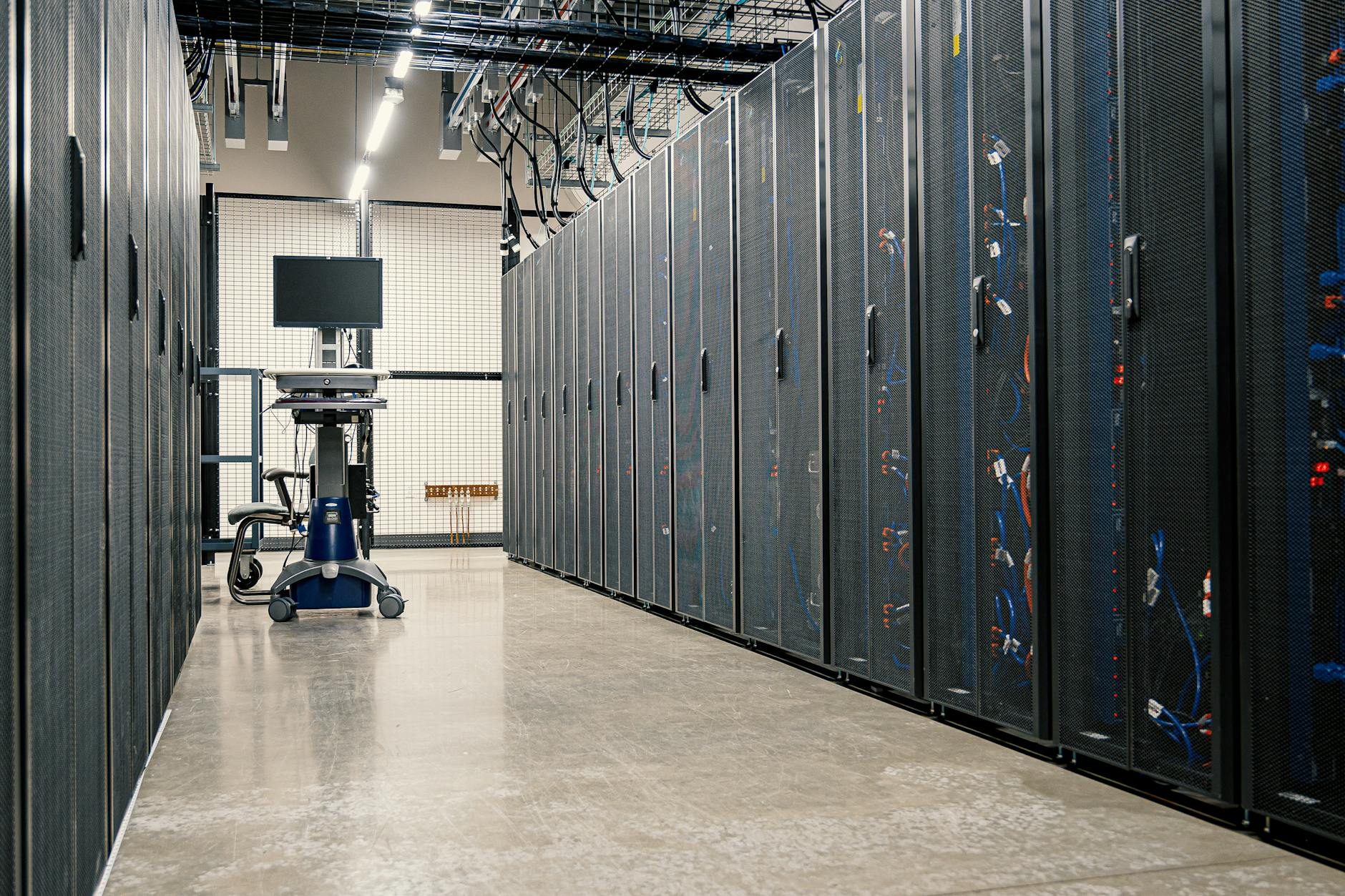

As data centers spread across Central Virginia, a quiet infrastructure boom is driving up energy demand, straining water systems, and sparking a growing political battle over who bears the cost.
On paper, the buildings are unremarkable.
Low, windowless, and often set far back from the road, they rise from former farmland and wooded parcels across Central Virginia to include Chesterfield, Henrico, Hanover, Powhatan. No signage. No foot traffic. No obvious connection to the daily life of the communities around them.
Inside, however, is the infrastructure of the modern world. These are data centers; vast warehouses of servers powering everything from streaming and cloud storage to artificial intelligence. And increasingly, they are reshaping the Richmond region.
What was once a spillover market from Northern Virginia has become something else entirely: a fast-growing hub, with dozens of facilities already operating and dozens more planned or under construction. The transformation is happening quickly. But the consequences, especially around energy, water, and cost, are only beginning to come into focus.
A Boom Measured in Megawatts
The scale of the expansion is difficult to grasp until it’s translated into energy. A single large data center campus can require hundreds of megawatts of electricity. At the upper end, proposals in the Richmond region approach 900 megawatts which is roughly the equivalent of powering more than 200,000 homes. That level of demand is not theoretical. It is already shaping how Dominion Energy plans the future of the grid.
In filings to regional grid operators, Dominion Energy has stated that data center load is the primary driver of its forecasted load growth.
Over the next 15 years, that demand is expected to more than triple.
To meet it, Dominion is pursuing major infrastructure investments, including a proposed 1,000-megawatt natural gas plant in Chesterfield County, a project framed as necessary to keep the system stable as demand surges. Dominion has stated in planning documents that additional dispatchable generation is needed to maintain reliability as demand increases.
For many residents, the question is not just how to generate more power. It’s who pays for it.
The Invisible Line on Your Power Bill
Electric grid expansion is expensive. New plants, transmission lines, and substations require billions in investment. Under Virginia’s current regulatory structure, those costs are not always borne solely by the companies driving the demand. Instead, they are often spread across the broader ratepayer base.
State analysts at the Virginia Joint Legislative Audit and Review Commission have warned that residential customers could see monthly bill increases of $14 to $37 by 2040. This does not include the rate increases that have already happened and continue to happen in the face of rising fuel cost.
The concern has gained traction in the General Assembly, where lawmakers are now grappling with how to rebalance the system. Lawmakers have raised concerns in recent sessions about infrastructure costs being shifted onto residents and about the pace of data center growth outpacing current policy frameworks.
The result is a growing sense that the benefits and burdens of the boom are unevenly distributed. Data centers bring tax revenue and construction jobs. But they require relatively few permanent workers. And the infrastructure they depend on power, water, land is shared with the communities around them. Lawmakers and policy advocates have emphasized that economic benefits do not necessarily justify shifting infrastructure costs onto residents.
Water: The Less Visible Strain
If electricity is the most immediate pressure point, water is the quieter one. Data centers generate heat, and that heat must be managed. Some facilities rely on air cooling, but others use evaporative systems that consume significant amounts of water, especially during hot summer months.
According to the Virginia Joint Legislative Audit and Review Commission, water use varies widely across facilities and depends heavily on cooling systems. In Hanover County, one proposed campus offers a glimpse of what that can look like locally.
Planning documents estimate “Projected average daily water usage is 600,000 gallons per day, with maximum daily demand of 2,000,000 gallons.”
That translates to hundreds of millions of gallons per year for a single project.
County officials have emphasized that “The existing water system has sufficient capacity to meet the needs of the proposed development.”
Unlike electricity, water impacts are highly localized and cumulative. As more facilities come online, the question is not just whether one project can be supported, but how many a system can absorb.
Land, Speed, and Secrecy
The physical footprint of the boom is reshaping the region in other ways. Large tracts of rural or semi-rural land are being rezoned for industrial use. Forests are cleared. Farmland is converted. Transmission corridors expand.
Many projects move through the approval process under code names, with limited public visibility until late stages. By the time residents become aware, decisions are often already in motion.
In Hanover County, public opposition has already influenced outcomes. In Henrico, officials have taken a more cautious approach. In Chesterfield, development continues to accelerate alongside energy infrastructure planning. Across jurisdictions, the same pattern is emerging: rapid expansion followed by community pushback.
A Statewide Fight Comes to Richmond
What began as a local land-use issue has become a statewide policy debate. At its center is a fundamental question: Should data centers, some of the largest energy consumers in the modern economy, pay the full cost of the infrastructure they require?
Utilities argue that growth benefits the broader economy and must be supported at scale. Dominion Energy has stated that it must continue to invest in transmission and generation infrastructure to serve growing customer demand.
Lawmakers and consumer advocates see it differently. They argue that without clearer cost allocation, residents will continue to absorb a disproportionate share through higher monthly bills and long-term infrastructure commitments.
The debate is also colliding with Virginia’s clean energy goals. Even as the state pushes toward a lower-carbon grid, the surge in demand is driving renewed investment in fossil fuel generation. Richmond sits at the center of that contradiction.
The Next Phase
The trajectory is clear: more data centers are coming. The open question is how the region and the state will manage what comes with them.
Will infrastructure costs be rebalanced? Will water usage be more tightly regulated? Will local governments slow or reshape development? Or will Richmond follow Northern Virginia’s path, becoming a fully built-out digital corridor?
For now, the buildings continue to rise quietly, steadily, and often out of view. But their impact is becoming harder to ignore.
















Leave a Reply