

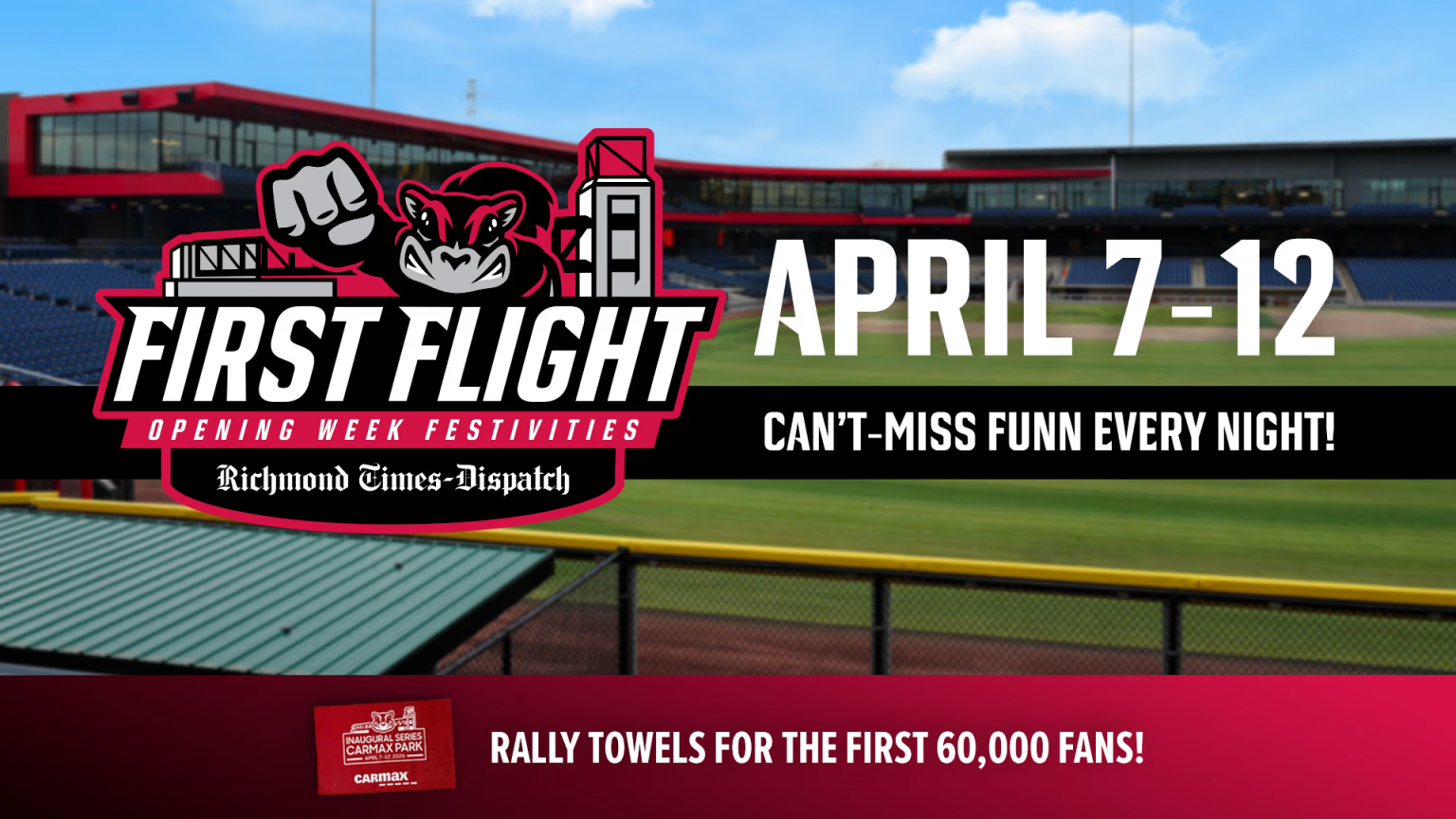
After years of planning, debate, and stalled proposals, baseball is finally arriving at CarMax Park.
On April 7, the Richmond Flying Squirrels will host their inaugural home game at the new stadium, officially moving on from The Diamond and ushering in a new phase for one of the city’s most closely watched redevelopment efforts.
For Richmond, the moment carries weight beyond the game itself. The push to replace The Diamond has stretched across decades, often tied to broader conversations about land use, economic development, and how the city invests in shared public spaces. With CarMax Park now opening its gates, the first piece of that long-envisioned transformation is finally tangible.
But the bigger story may be what happens outside the stadium walls.
City leaders and developers have long framed the Diamond District as a future mixed-use hub, where housing, retail, and public gathering spaces converge around the ballpark. Opening week will offer an early test of that vision—particularly for nearby businesses and corridors that could see increased foot traffic on game nights.
Restaurants, small businesses, and pop-up vendors in adjacent neighborhoods are expected to benefit from the influx of fans, especially during evening games that encourage pre- and post-game activity. Whether that translates into sustained economic momentum—or remains limited to game-day spikes—will be one of the key storylines to watch through the season’s first homestand.
Inside the park, the Flying Squirrels are signaling a different kind of ballpark experience.

- What’s New at CarMax Park
- Open lawn seating for flexible, group-friendly viewing
- Inclusive playground integrated into the ballpark experience
- Private lactation suite for families
- Expanded community-use design for non-baseball events
- Modernized entry, circulation, and gathering spaces
Rather than focusing solely on traditional seating, CarMax Park introduces a mix of flexible and family-oriented spaces. Plans highlight open lawn seating areas designed for groups, an inclusive playground that expands how younger fans engage with the stadium, and a private lactation suite—features that reflect a broader shift toward making the ballpark accessible to a wider range of visitors.
That design approach positions CarMax Park less as a single-purpose sports venue and more as a multi-use civic space. Team officials have indicated the stadium will also host concerts, festivals, and community events, aligning with a growing trend of ballparks serving as year-round anchors rather than seasonal destinations.
Game scheduling maintains the familiar cadence of minor league baseball, with most Tuesday through Saturday games beginning at 7:05 p.m. and gates opening roughly 90 minutes before first pitch. Those early entry windows may play a key role in shaping how fans interact with the surrounding area—whether they arrive early to explore nearby businesses or remain largely contained within the stadium itself.
As Opening Day approaches, several questions remain: how fans respond to the new experience, how neighboring areas absorb increased traffic, and how quickly the Diamond District evolves beyond the ballpark.
What is clear is that April 7 marks a transition point. After years of anticipation, delays, and debate, Richmond is no longer talking about a new stadium—it’s stepping into it.








Leave a Reply