

Federal Judge Orders Damages in Arthur Ashe Mural Vandalism Case

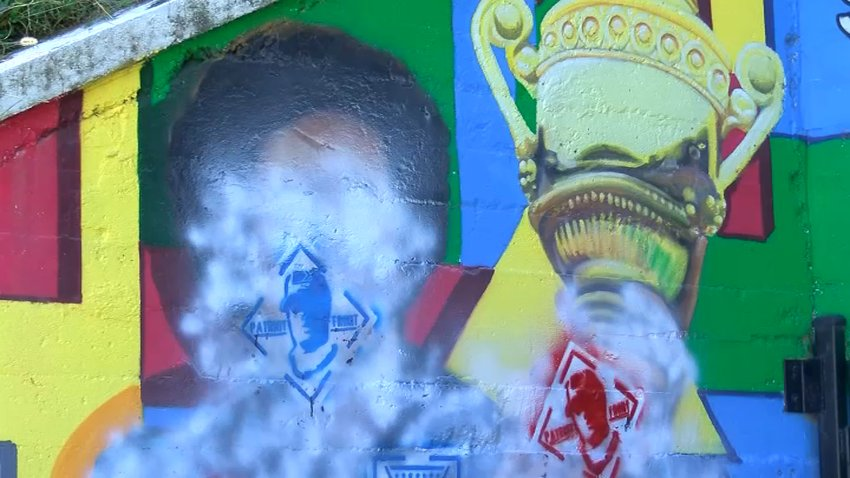
A federal judge has ordered members of the white nationalist group Patriot Front to pay damages following their role in the 2021 vandalism of a mural honoring Arthur Ashe, bringing a close to a closely watched civil rights case in Richmond.
The ruling stems from a lawsuit filed in the U.S. District Court for the Eastern District of Virginia, where plaintiffs argued the defacement of the mural in Battery Park was not random vandalism, but a coordinated act of racial intimidation.
A Test of Civil Rights Law in a Local Setting
The case centered on a June 2021 incident in which Patriot Front members spray-painted racist symbols and propaganda over the Ashe mural, located in a historically Black neighborhood where the tennis champion spent part of his childhood.
Rather than pursuing only criminal vandalism charges, residents brought a federal civil suit under the Ku Klux Klan Act of 1871, arguing the act was intended to interfere with their ability to safely and freely use a public park.
That framing proved critical.
In 2024, a federal judge rejected motions to dismiss from the defendants, allowing the case to proceed as a civil rights conspiracy—a relatively rare application of the Reconstruction-era statute in a contemporary setting.
Court-Ordered Damages
Following that ruling, the case advanced toward resolution. The court ultimately ordered damages as part of a settlement reached with several Patriot Front members.
While the exact financial terms were not publicly disclosed, the outcome carries the force of a federal judgment—distinguishing it from a purely private settlement and reinforcing the legal consequences tied to the defendants’ actions.
The decision stops short of a full trial verdict but affirms the core argument presented by plaintiffs: that the vandalism constituted targeted intimidation, not simply property damage.
Why This Case Matters
The significance of the case extends beyond the individuals involved.
Arthur Ashe remains one of Richmond’s most important cultural figures—a barrier-breaking athlete and global advocate whose legacy is embedded across the city’s public landscape. The mural in Battery Park is part of that broader effort to anchor his story in the community where it began.
By targeting that image, plaintiffs argued, the perpetrators were sending a message not just about Ashe, but about who belongs in that space.
The federal court’s willingness to treat the act through a civil rights lens signals a broader shift in how such incidents may be interpreted going forward.
Public Art, Power, and Protection
Richmond’s public art landscape has been at the center of national conversations in recent years, particularly as Confederate monuments were removed and replaced with new forms of cultural expression.
Murals like the one honoring Ashe function as more than visual landmarks—they are assertions of history, identity, and presence.
This case positions those works within a legal framework that acknowledges their social weight. When targeted by organized extremist groups, the harm is not limited to paint on a wall—it extends to the communities those images represent.








Leave a Reply