

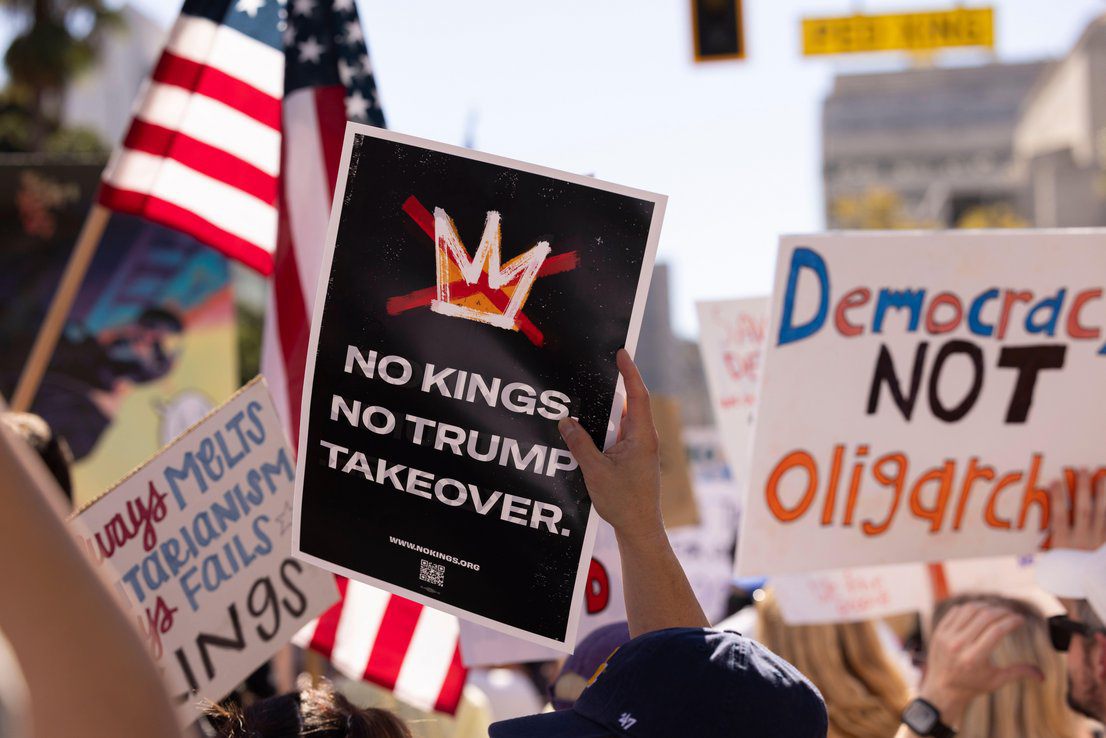
Richmond’s participation in the national “No Kings” day of action took shape in two distinct—but aligned—ways on Saturday, offering a snapshot of how modern protest movements can adapt to different audiences and styles.
Within downtown, two rallies unfolded just blocks apart. One transformed Monroe Park into a gathering space centered on speakers, music, and community connection. The other launched from Kanawha Plaza, taking participants through the streets in a visible, coordinated march.
Different formats, same purpose.
Two Approaches, One Message
At Monroe Park, the event took on the feel of a civic gathering. Attendees moved through a programmed experience that included speakers and shared moments of reflection. The setting created space for conversation, listening, and connection—an approach that emphasized accessibility and community presence.
At Kanawha Plaza, the energy carried outward. After opening remarks, participants stepped into the streets, turning the demonstration into a moving expression of the day’s message. Signs, chants, and coordinated movement brought the protest directly into Richmond’s downtown corridors.
Together, the two events illustrated how the same message can take multiple forms—one rooted in place, the other in motion.
A Flexible Model of Participation
For many attendees, the proximity of the two rallies created an opportunity rather than a limitation. Some chose the format that best fit how they wanted to engage—whether that meant gathering in the park or joining a march through the city. Others moved between the two, experiencing both the stationary and mobile expressions of the day.
The result was a layered experience that reflected the flexibility of the broader movement.
Rather than a single format, Richmond’s turnout demonstrated that civic participation can look different from person to person—while still contributing to a shared goal.
Part of a National Day of Action
Across the country, the “No Kings” demonstrations were designed to be locally organized but nationally connected. Cities hosted rallies, marches, and gatherings that reflected their own communities while contributing to a larger, unified message.
Richmond’s dual events fit naturally within that framework.
The Monroe Park gathering emphasized dialogue, presence, and collective space. The Kanawha Plaza march highlighted visibility, movement, and public demonstration. Both approaches aligned with the broader aim of the day: to bring people together in visible, participatory ways across the country.
What It Shows About Richmond Right Now
Taken together, the two rallies highlight a city engaged in civic life through multiple channels.
Richmond has long been a place where public expression takes many forms—from marches through historic streets to gatherings in central public spaces. Saturday’s events continued that tradition, showing how different approaches can exist side by side while reinforcing a shared message.
For participants, the day offered options: to stand, to walk, to listen, to speak, to gather.
And across both spaces, the throughline remained clear—people showing up, in different ways, for the same moment.






Leave a Reply