

Rooted in Rhythm: Kadencia’s Afro-Puerto Rican Sound
Bright horns punch through the room over rolling bass and percussive piano, but beneath Kadencia Orchestra’s full sound is a rhythm with roots much older than the band itself. Its patterns span generations, reaching the father and son leading the ensemble onstage: Maurice Sanabria-Ortiz and Maurice “Tito” Sanabria. Now they pass the Afro-Puerto Rican music and traditions entrusted to them on to anyone willing to listen. Through explanation and demonstration, Maurice and Tito peel back Kadencia’s full instrumentation to a sound that predates the flare of brass and steady pulse of a modern rhythm section, revealing Bomba and Plena in their traditional forms: just vocals and percussion.

Both traditions emerged in western Puerto Rico, with deep roots in the coastal city of Mayagüez, where Kadencia also originated. Bomba developed among enslaved Africans, who used drums and call-and-response vocals to communicate. The format helped overcome language barriers created by enslavers who separated people from different ethnic and linguistic groups.
Plena emerged later, around the beginning of the 20th century, and became what Tito calls “the newspaper, the song newspaper: El Periódico Cantado.” Its call-and-response form carried news and stories through the community and accompanied events ranging from strikes and funerals to sports. Although the drum patterns and instrumentation changed, Plena’s importance to the community remained much like that of its predecessor, Bomba. As Maurice puts it, “It’s something that is very ingrained in the Puerto Rican culture.”
That history can still be heard in the instruments themselves. Bomba is built around barriles, with the primo improvising in response to the dancer while the buleador holds the underlying rhythm. Plena uses handheld panderos of different sizes and pitches, with separate parts locking together to create the larger pattern. Those instruments remain part of Kadencia even when the traditional rhythms are surrounded by the much larger sound of a contemporary ensemble. Congas and timbales may reinforce the patterns, but the original Bomba barrels and Plena hand drums are not replaced.
In 2007, in the birthplace of Bomba and Plena, Kadencia was founded. Maurice says that by then both genres had evolved over decades into a more fully orchestrated sound, which the father-and-son duo embraced. As is often the case in music, styles influence one another, and Bomba and Plena are no exception. They heavily influenced Salsa while also absorbing elements of cross-Caribbean and Afro-Cuban instrumentation. That evolution gives Kadencia room to move between tradition and a much broader musical palette. The percussion remains the foundation, but bass gives the rhythms additional weight, piano adds another percussive and harmonic layer, and the horn section pushes the melodies above it all. The traditional forms are not treated as museum pieces. Instead, they become the foundation on which the ensemble builds.
With that in mind, Kadencia plays not only Bomba and Plena but Salsa, expanding the instrumentation while approaching all three with the same musicianship. When the group moved to Richmond in 2018, a change in the brass section transformed its sonic character. “The original Kadencia was founded in 2007 in Puerto Rico, and that first version was a three-trombone band,” Maurice says. “When we came to Richmond, we changed the sound to a more aggressive sound.”
That aggression comes from a much brighter lineup of two trumpets, one trombone and one saxophone. Where three trombones gave the original group a heavier brass voice, the Richmond configuration puts more brightness on top of the rhythm section. Trumpets can cut across the ensemble, while trombone and saxophone fill out the middle of the horn sound. The result is a high-energy sound that makes you move your feet, have fun and immerse yourself in the music. Even with the change, the root of the sound remains the same, and that root is still Puerto Rico.
It starts with the writing, usually led by Maurice but developed through a collaborative process. Much of the arranging remains a product of his connections in Puerto Rico. He sends ideas to a team of composers and arrangers, who work with him and the musicians here to shape the final product. The distance between Richmond and Puerto Rico has not severed that creative relationship. Instead, the music moves back and forth — ideas beginning here can return to Puerto Rico for development before becoming arrangements performed by musicians in Richmond. Even in RVA, Mayagüez and the western region of Puerto Rico actively keep Kadencia connected to the sound it represents.
The group is built on the kind of authenticity that comes from passing something forward. From its inception, the music at the core of Kadencia has been an example of that exchange. Just as Africa provided the building blocks from which Bomba developed in Puerto Rico, Maurice passed his love for the music to his son Tito. Neither can speak highly enough about how that shared passion has strengthened their bond. For Maurice, four decades of making music have been accentuated by the disbelief that he now gets to do it alongside his son. “It’s been something beautiful,” he says. Tito adds, “We’ve spent a ton of quality time doing music, probably more than before we did music. … I think it’s been a unifying endeavor.” That enthusiasm for sharing the beauty of their culture has already reached another generation. Tito’s daughter has performed in the chorus for Kadencia — three generations sharing a stage and their love of music designed to unify a community.

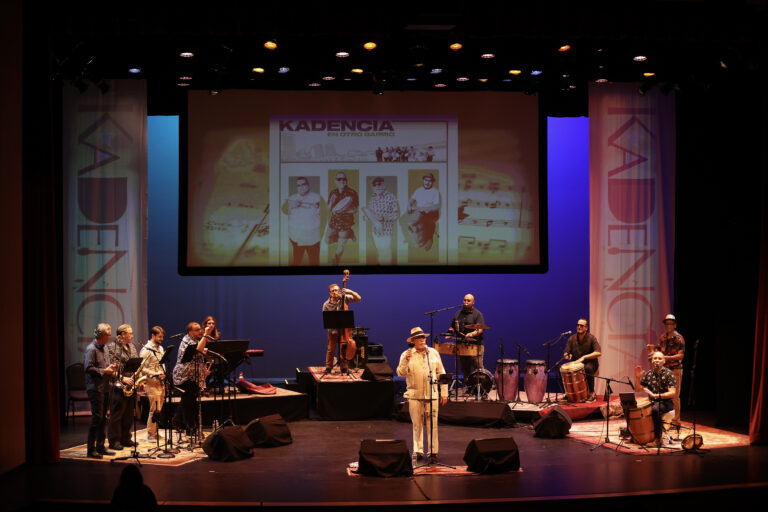
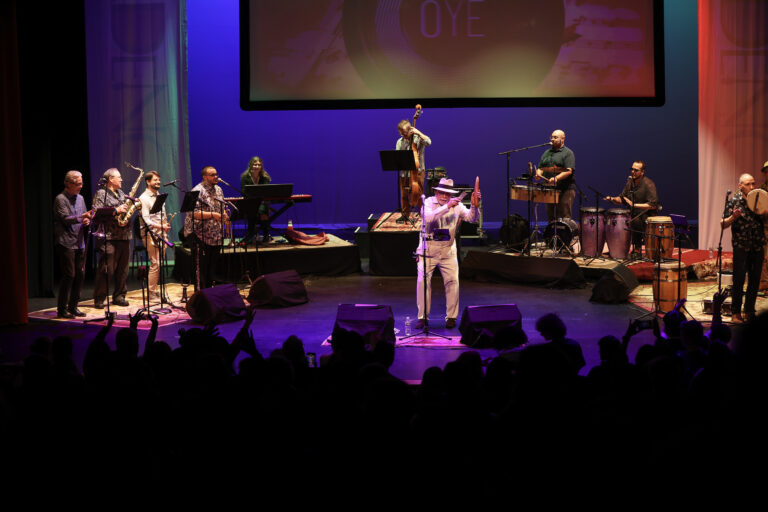
- Full instrumentation of Kadencia Orchestra on stage. (Photo by: Dawn Hobbs / Oh! Shoot Photography)
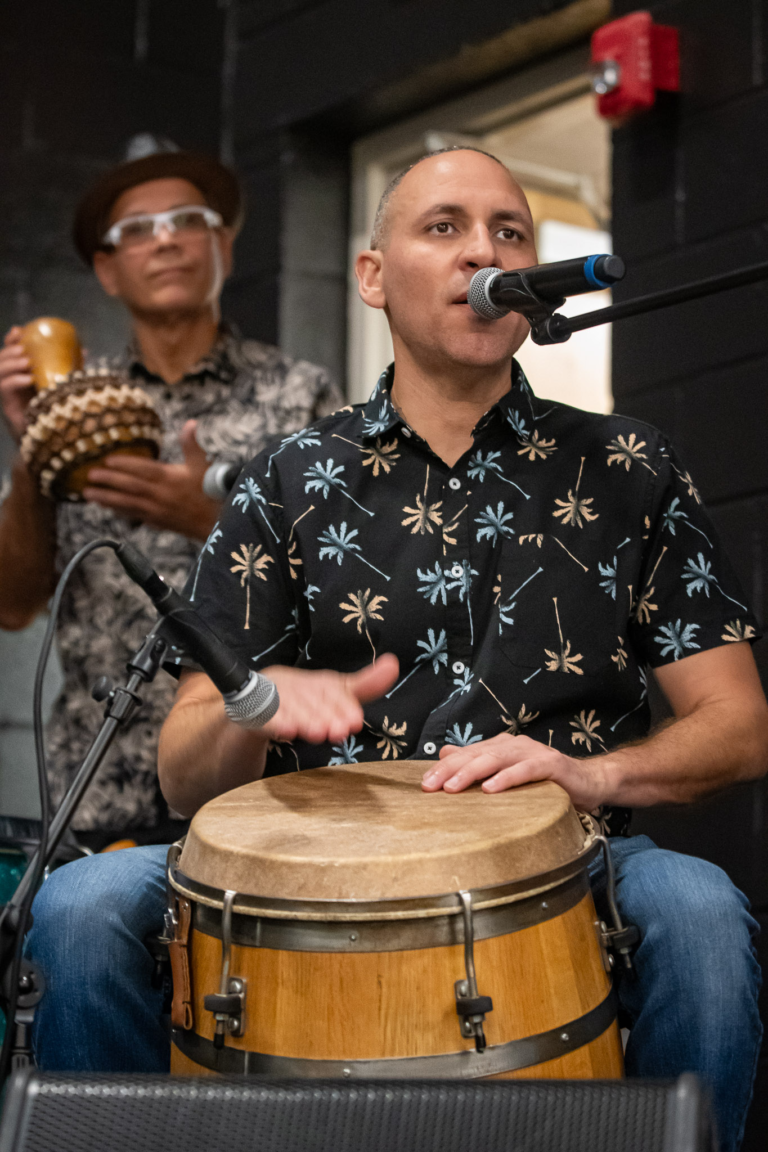
- Maurice “Tito” Sanabria play a traditional barril de bomba. (Photo by: M. T. Bostic / The Cultural Current)
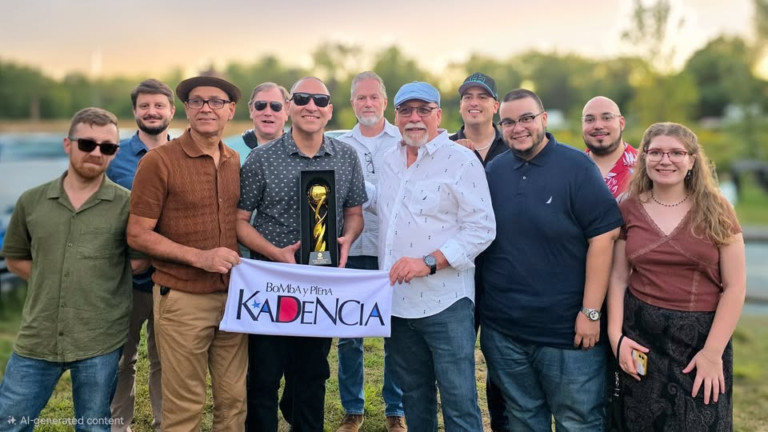
- Photo by Sergio Rosario
- Maurice Sanabria-Ortiz leads the Kadencia Orchestra on stage. (Photo by: Dawn Hobbs / Oh! Shoot Photography)
That passing of tradition does not stop with the Sanabria family or their bandmates. With each performance, they are not there simply to entertain. They make sure they educate as well. They demonstrate rhythms on the instruments and explain the music and its history, giving audiences an understanding of the social importance behind what they hear. Through an initiative they call “La Práctica,” they are opening that circle to the Richmond community, offering people a chance to learn more and even play the percussion instruments alongside professional musicians. Founded by Tito, La Práctica is a free monthly community of practice centered on Plena, with plans to expand its Bomba programming. “It’s free. It’s open to the community,” he says. Musicians, dancers and community members can take part at different levels, learning through the same collective exchange that has long defined the music.
That approach will be visible during Kadencia’s University of Richmond residency. On Oct. 15, participants can learn traditional Plena percussion and Bomba dance accompanied by live barrels. At Family Arts Day on Oct. 18, children and other first-time players can try a maraca, practice percussion patterns and hear how the separate pandero parts combine before Kadencia performs with the full ensemble.
The progression reflects Kadencia’s larger purpose. Maurice passed the music to Tito, and Tito’s daughter has already joined them onstage. Through La Práctica, that exchange reaches beyond the family. A new participant learns a pandero pattern. A child keeps time with a maraca. The music that traveled from Puerto Rico to Richmond moves forward through the hands of someone learning to play it.


