
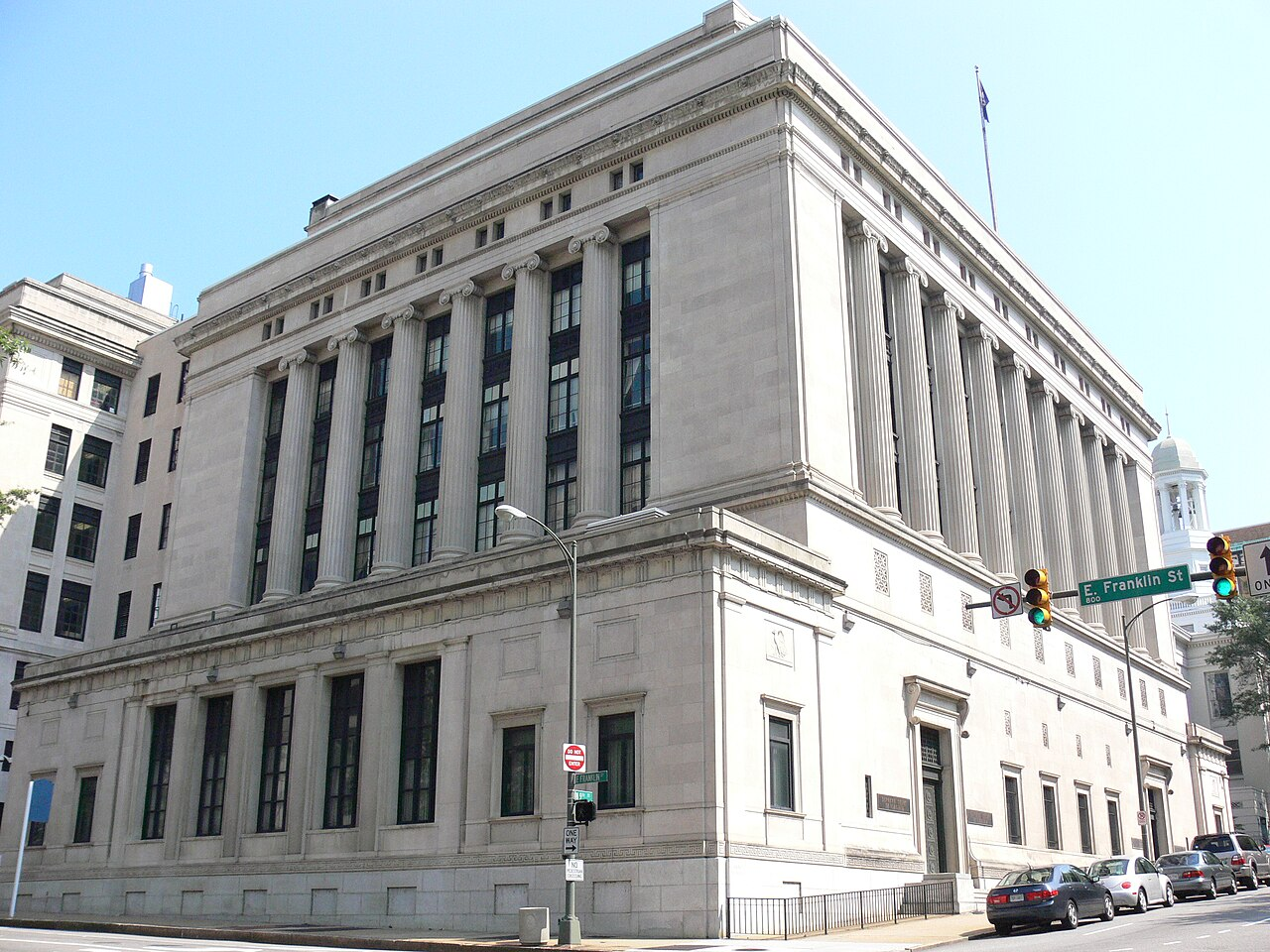
Virginia Supreme Court Blocks Redistricting Plan, Keeping Current Congressional Map in Place
Virginia’s Supreme Court ruled Friday that state lawmakers did not properly follow the Constitution when trying to change how congressional districts would be redrawn.
The decision blocks a proposed amendment that could have allowed the General Assembly to redraw Virginia’s congressional map before the next census. As a result, the current map will stay in place for now.
The ruling is already being viewed as one of the most important political decisions in Virginia this year because it affects voting power, representation, and the future of the state’s anti-gerrymandering reforms.
What Happened?
Virginia lawmakers had pushed a constitutional amendment that would have reopened congressional redistricting in the middle of the decade.
Normally, congressional maps are redrawn once every 10 years after the U.S. Census.
Critics argued the proposal was mainly designed to give one political party a major advantage in Congress.
But the Supreme Court did not focus on party politics in its ruling. Instead, the justices said lawmakers failed to follow the proper constitutional process required to amend Virginia’s Constitution.
In simple terms, the court said:
- you cannot change the Constitution by skipping steps,
- even if lawmakers and voters support the idea.
The court ruled the procedural mistake made the entire referendum invalid.
Why This Matters
The decision keeps Virginia’s current congressional districts in place.
Those districts were created after Virginia voters approved anti-gerrymandering reforms in 2020. The reforms were meant to reduce partisan map manipulation and make the process more transparent.
After a bipartisan redistricting commission failed to agree on maps in 2021, the Virginia Supreme Court appointed outside experts to draw the districts currently being used.
Many voting-rights groups considered those maps fairer than older maps that heavily favored one party.
Impact on Black and Coalition Districts
The ruling is especially important for Black voters and coalition districts across Virginia.
In places like Richmond, Petersburg, Hampton Roads, and Northern Virginia, Black political influence often depends on coalition districts — areas where Black voters join with suburban, younger, immigrant, and progressive voters to elect candidates.
The current map protects several of those coalition areas.
Critics of the proposed amendment worried that reopening redistricting could weaken Black voting power by changing district boundaries.
That could happen through:
- “packing,” where Black voters are concentrated into fewer districts,
- or “cracking,” where communities are split apart across multiple districts.
Voting-rights advocates argued that changing district lines again so soon after the 2020 reforms would create instability and reduce trust in the system.
Richmond’s Role
Richmond sits at the center of the debate because many of the state’s most politically important coalition districts connect Richmond with nearby suburbs and cities like Petersburg.
The case also highlights Richmond’s role as Virginia’s political hub, where battles over voting rights, representation, and state government often play out.
Local lawmakers, advocacy groups, and universities are expected to weigh in heavily on what the ruling means moving forward.
Bigger Picture
The ruling is about more than district maps.
The court’s broader message was that constitutional rules exist to prevent rapid political changes and protect public trust in democracy.
Virginia spent years promoting its 2020 reforms as an effort to move away from extreme partisan gerrymandering.
Friday’s ruling reinforces that those reforms — and the constitutional process behind them — still matter.
For now, Virginia’s current congressional map remains in place, and the state’s debate over representation and voting power continues.
Author