
Promises, Policies, and Backdoor Access: Richmond’s Flock Camera Controversy
When Richmond officials expanded the city’s use of Flock Safety cameras, the message to residents was clear: the automated license plate reader system would help police solve crimes while operating under strict privacy protections.
City leaders and police officials emphasized guardrails. Data would only be retained for a limited period. Searches would be audited. Access would remain controlled. Most importantly for many concerned residents, Richmond insisted the system would not be used to support federal immigration enforcement.
But a series of developments over the last year, culminating in the Richmond Police Department’s disclosure that a sergeant improperly shared Flock information with a federal agent, has intensified concerns that surveillance systems marketed as locally controlled may be far more difficult to contain in practice.
The disclosure, first reported by The Richmonder, involved a homicide investigation in Washington, D.C., not immigration enforcement. Still, privacy advocates and critics of the city’s surveillance expansion argue the incident illustrates a larger problem: once broad surveillance infrastructure exists, policy barriers can quickly become dependent on individual compliance rather than meaningful structural limitations.
That distinction now sits at the center of Richmond’s growing debate over surveillance technology, accountability, and public trust.
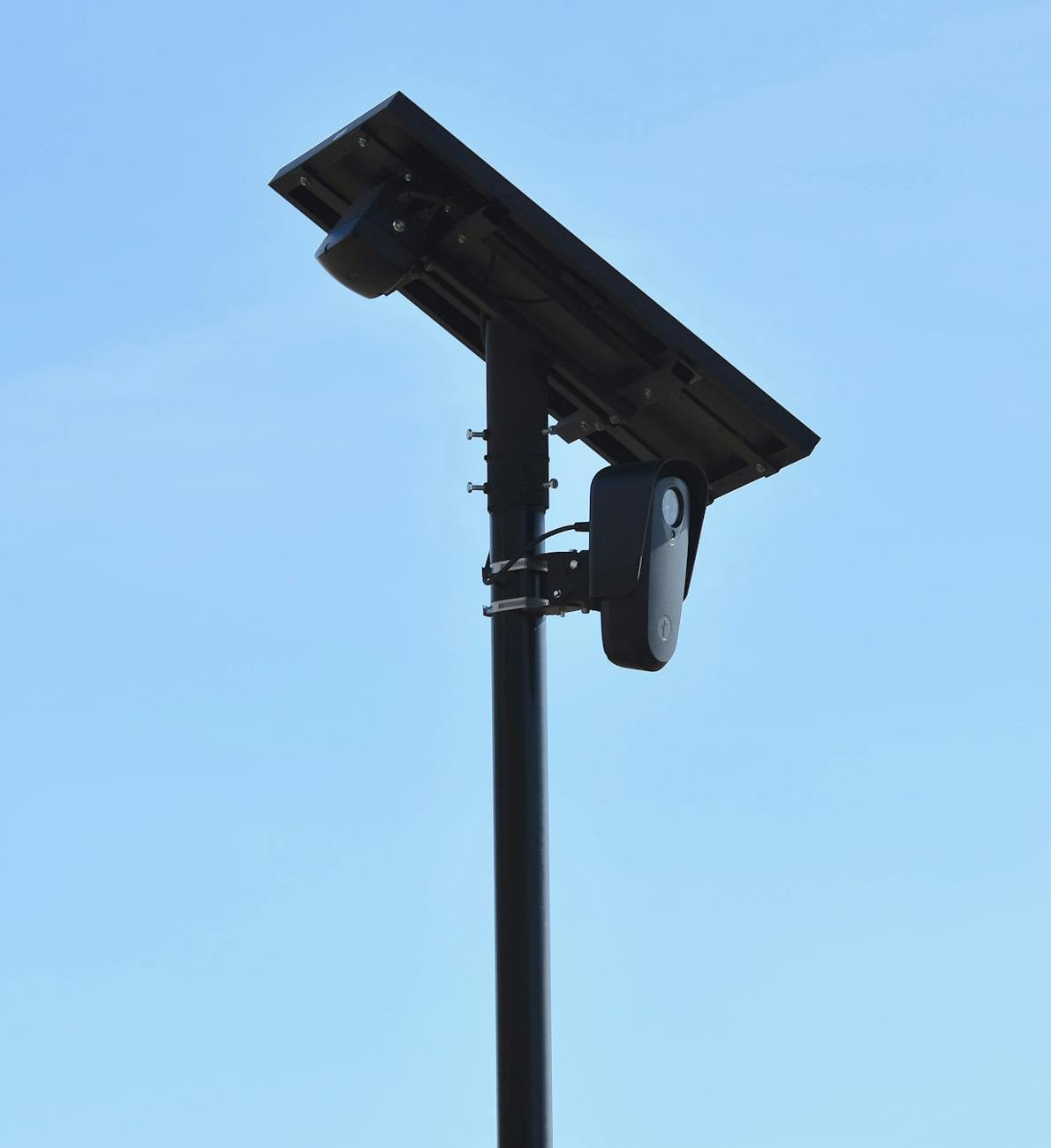
Flock Safety, a rapidly expanding private surveillance technology company, operates automated license plate reader systems used by law enforcement agencies across the country. The cameras capture images of passing vehicles and log information including license plate numbers, timestamps, vehicle characteristics, and locations. Supporters say the technology has become a valuable investigative tool in cases involving stolen vehicles, violent crimes, missing persons, and fugitives.
Across Virginia, local governments have increasingly adopted the systems while attempting to reassure residents that protections are in place to prevent abuse.
Richmond’s public facing materials emphasized those safeguards heavily. The city stated that data would be retained for 21 days and that the system would not be used for immigration enforcement purposes. Officials also pointed to auditing measures intended to track searches and prevent misuse.
Yet national investigations and civil liberties organizations have repeatedly challenged whether those protections are sufficient once local systems become connected through regional and national law enforcement networks.
The Electronic Frontier Foundation, one of the country’s leading digital privacy advocacy groups, has spent years documenting what it describes as “backdoor” pathways into local surveillance systems. Their investigations have highlighted how federal agencies can sometimes obtain access indirectly through partnerships with local departments, even when formal restrictions exist.
Those concerns escalated nationally after reports surfaced that federal agencies were using local Flock connected systems in investigations tied to immigration enforcement. NPR recently reported that multiple jurisdictions across the country moved to cancel or reconsider contracts with Flock Safety after revelations that license plate reader systems had been connected to immigration surveillance concerns.
For immigrant communities and civil liberties advocates, the issue extends beyond any single search or agency request. The larger fear is that local surveillance tools increasingly operate inside a broad and interconnected policing ecosystem where data sharing can occur across jurisdictions, agencies, and investigative categories.
In Richmond, those anxieties have become especially politically sensitive because city officials previously sought to distinguish the city’s program from more expansive surveillance practices elsewhere.
Last year, Richmond announced it would block federal agencies from accessing the city’s Flock system after reports involving immigration related searches intensified scrutiny around automated license plate reader technology nationwide. The move was presented as evidence that the city could establish firm boundaries around how the technology would be used.
The recent Richmond Police disclosure now complicates that narrative.
Critics argue the incident demonstrates that safeguards are only as effective as the people enforcing them. Even if systems technically prohibit certain forms of access, officers can still share information externally through screenshots, manual communications, or informal requests.
For supporters of the technology, however, the incident represents an individual policy violation rather than evidence that the system itself is fundamentally flawed. Law enforcement advocates maintain that automated license plate reader technology remains a legitimate and important investigative tool, particularly in serious criminal cases involving violence or public safety threats.
That tension, between investigative utility and fears of unchecked surveillance expansion, is becoming increasingly central to local debates nationwide.
In Richmond, the controversy also carries historical and cultural weight beyond technology policy alone.
Civil rights advocates have long argued that surveillance infrastructure disproportionately impacts Black communities and other historically over policed populations. Critics view the growth of automated monitoring systems as part of a broader evolution from traditional policing practices toward data driven surveillance that can deepen existing inequalities while operating with limited public oversight.
For some community organizers, Richmond’s Flock debate is not simply about cameras. It is about trust.
Who gets monitored? Who controls the data? What happens when public assurances conflict with real world practices? And how much transparency should residents expect when surveillance systems expand faster than oversight mechanisms?
Those questions are likely to intensify as Richmond officials face renewed pressure to explain how violations are detected, how discipline is handled, and whether additional reforms are necessary to prevent future unauthorized sharing.
The next phase of the debate may ultimately hinge less on whether the cameras help solve crimes and more on whether residents believe meaningful accountability actually exists once surveillance systems are in place.
For city leaders, the challenge is preserving public confidence in a technology they continue to defend as valuable for public safety.
For critics, the recent disclosure confirms a warning they have repeated from the beginning: once surveillance networks are built, the boundaries surrounding access can become increasingly difficult to enforce, especially when local policing intersects with federal investigations, expanding digital databases, and the growing reach of modern surveillance technology.
Author